



Embroidery or printing: what works best on your clothing?
Embroidery creates a dimensional stitched finish; printing offers more freedom for fine detail and colour. The best option depends on the garment, logo and position.
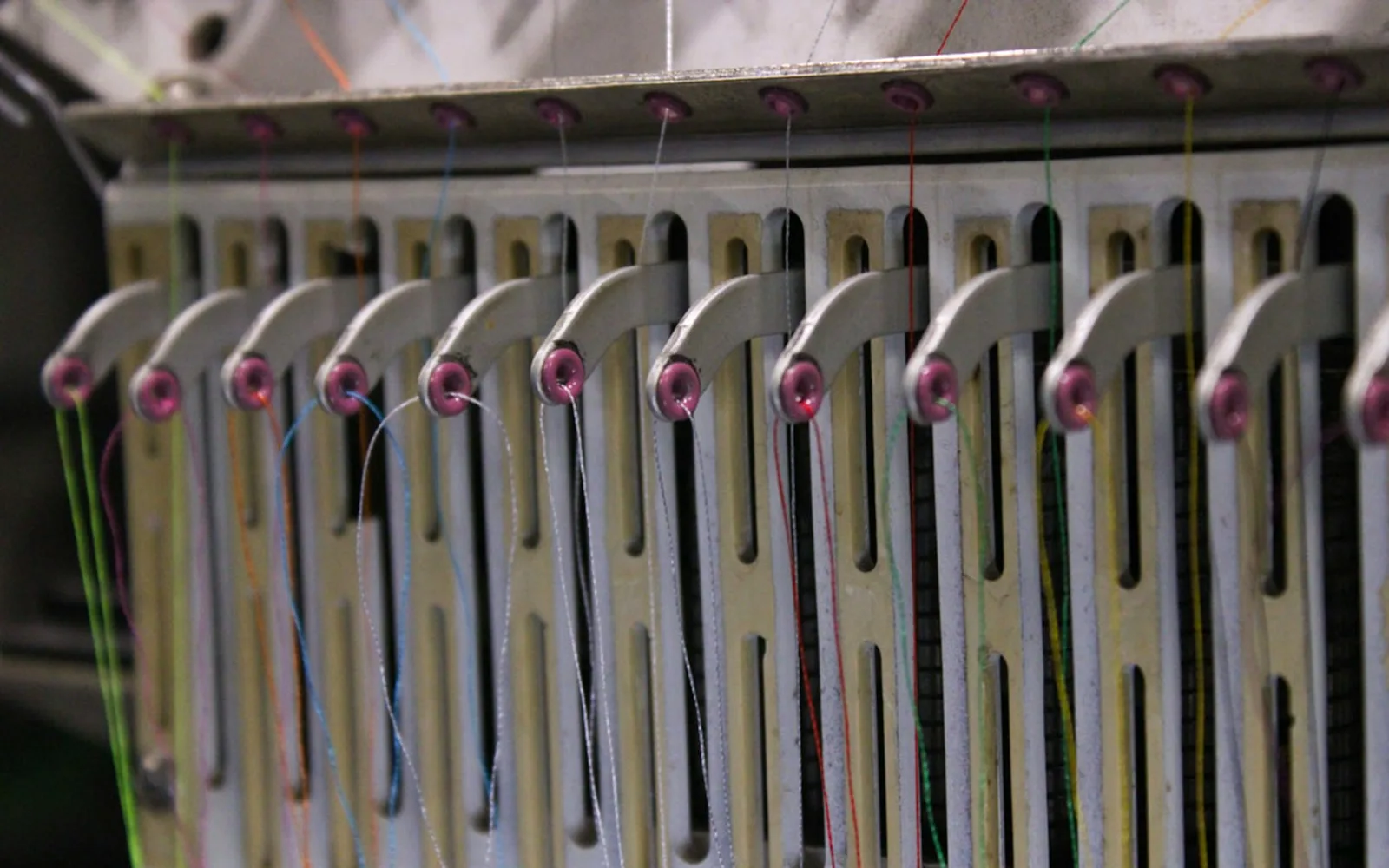
Embroidery and printing communicate different things. Embroidery is tactile and structured, while printing can reproduce fine lines, gradients and larger artwork. A good choice considers the design and garment together rather than treating one technique as universally more premium.
When embroidery is the stronger choice
Embroidery suits polos, caps, jackets, workwear and stable fabrics where a compact mark should look established and remain visible through regular use. Thread creates depth and catches light differently from ink.
Very small text, thin lines and colour gradients may need simplification. The fabric must also support the stitch count without puckering or becoming uncomfortable.
- Compact chest and cap logos
- Workwear and outerwear
- Designs with clear shapes and limited colours
- Projects that benefit from a dimensional finish
When printing gives more control
Printing is usually better for photographs, fine typography, gradients and large front or back graphics. DTF, DTG and screen printing each provide a different balance of feel, colour and production efficiency.
The print method must still suit the material. Stretch, coatings, heat sensitivity and dye migration can rule out an otherwise attractive process.
- Detailed and multi-colour artwork
- Large back or front designs
- Lightweight garments
- Designs where stitch thickness would change the artwork
Compare by position and garment
A left-chest logo on a polo may work beautifully in embroidery, while the same mark on a thin performance shirt may be better printed. Large embroidery on the back can become stiff, heavy and expensive.
One collection can combine methods: embroidery on jackets and caps, with printing on T-shirts. Consistency comes from coordinated dimensions and colour references, not necessarily one process everywhere.
Prepare the logo for production
Printing generally needs vector artwork or a high-resolution transparent raster file. Embroidery needs a stitch file created for a defined size, fabric and machine setup.
A vector logo is useful source material but is not itself embroidery-ready. Small lettering, spacing, outlines and stitch direction must be reviewed before production.
Frequently asked questions
Frequently asked questions about this subject
Is embroidery always more expensive?
No. Cost depends on stitch count, size, quantity and garment handling. A compact logo can be efficient; a dense large design is not.
Which lasts longer?
Both can last well. Embroidery is robust, but suitable printing produced and washed correctly can also have a long service life.
Can gradients be embroidered?
They can be approximated with thread, but the result will not reproduce a smooth digital gradient exactly.
Can I combine embroidery and printing?
Yes, either across a collection or on one garment when positions and production order allow it.
Do I need an embroidery file?
You can provide the best logo file available; a production-specific stitch file is then prepared and checked.
Project advice
Choose the finish that supports the garment
Share your logo, garment choice and positions. We will compare embroidery and printing for the actual project.
Request a quote