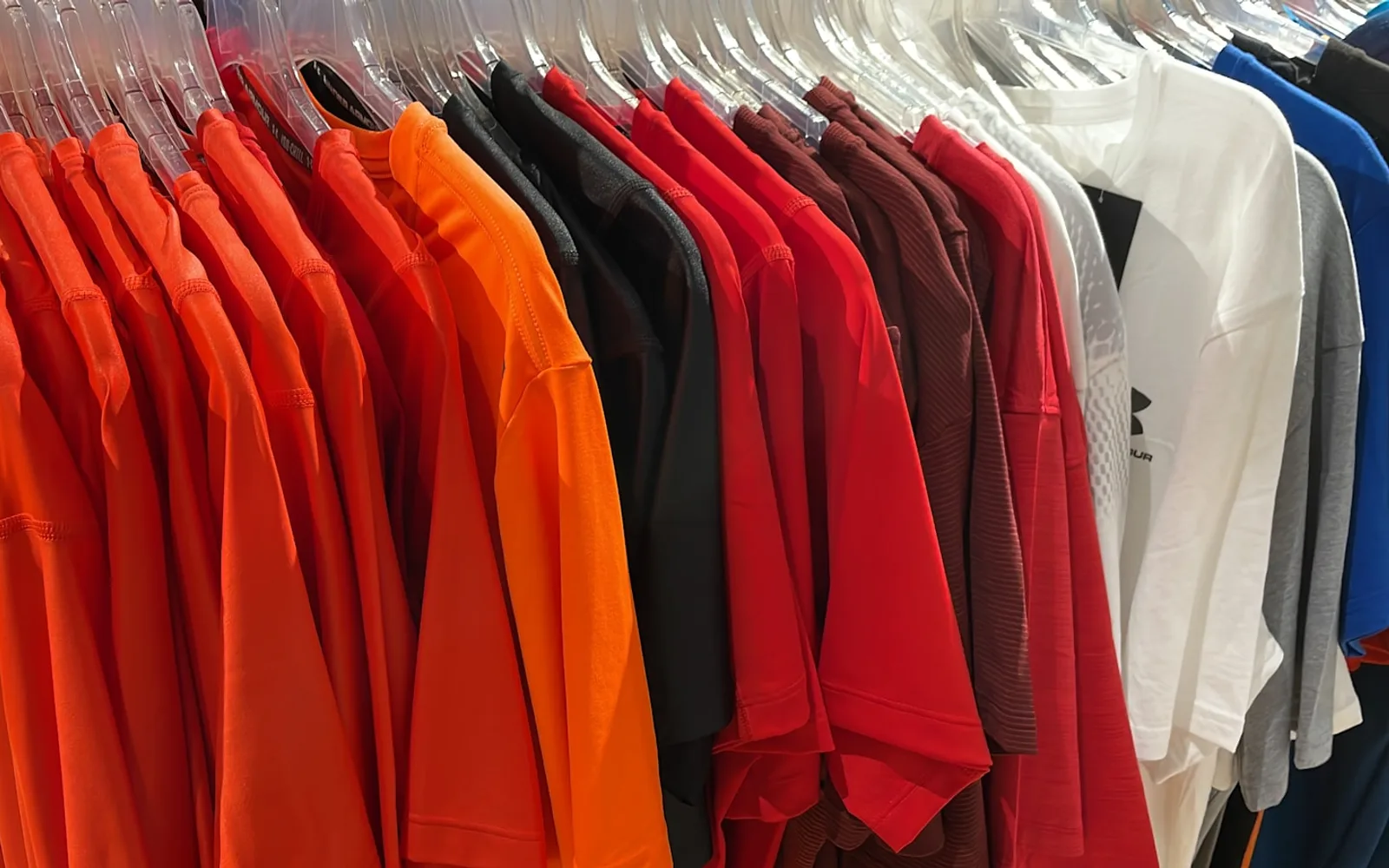
How to choose a blank T-shirt for printing
A good blank is not defined by fabric weight alone. Fit, opacity, surface, available sizes and repeat availability determine whether it supports the project.
The blank T-shirt is the foundation of the finished product. A technically good print cannot correct an unsuitable fit, transparent fabric or unreliable size range. Begin with the wearer and use case, then review printing compatibility.
Start with fit and wearer
Decide whether the project needs regular, relaxed, fitted or oversized styling. Check the actual measurement chart rather than relying only on S, M and L labels.
For teams or broad audiences, a dependable unisex or complementary fit range can reduce exchanges.
Use fabric weight as one indicator
GSM describes mass per square metre, not complete quality. A lighter shirt can be well made and comfortable; a heavier shirt can still have an uneven surface or unsuitable fit.
Consider drape, opacity, hand feel and climate together with weight.
Inspect the print surface and colour
Smooth, stable fabric supports fine detail. Rib, slub texture and loose fibres can change edge definition. Seams and pockets reduce the usable area.
Light garments should be checked for show-through, while saturated polyester blends may require migration testing.
- Fit and measurement chart
- Fabric composition and weight
- Opacity
- Surface smoothness
- Usable print area
- Colour and size availability
Plan repeat orders
A collection or uniform programme needs dependable product codes and colours. Ask whether the garment is a stable range and what equivalent is available if supply changes.
Wash a sample when shrinkage, shape retention and customer expectations are important.
Frequently asked questions
Frequently asked questions about this subject
Is a heavier T-shirt always better?
No. Weight affects feel and drape but does not guarantee fit, surface quality or construction.
What fabric is easiest to print?
Smooth cotton is versatile, but the best material depends on method, use and required feel.
How do I prevent white shirts being transparent?
Review fabric weight, knit density and an actual worn sample under realistic lighting.
Should I wash-test the blank?
Yes for retail, uniforms and repeat programmes where shrinkage and shape retention matter.
Can the same T-shirt remain available for years?
No supplier can guarantee unlimited continuity, but stable core ranges reduce replacement risk.
Project advice
Choose the blank around the wearer and print
Tell us the audience, fit, budget and artwork so we can narrow the suitable garment options.
Request a quote